


MPs have launched an inquiry into party political funding following fraud within the SNP.
The Scottish Affairs Committee said it will investigate the Electoral Commission’s oversight of party cash.
The committee announced it would separately investigate the dual role of the Lord Advocate, after concerns were also raised during the police investigation of former chief executive Peter Murrell.
The Westminster group said it would probe how the Electoral Commission, the political finance watchdog, oversees the funding and governance of political parties in Scotland, and the safeguards around the distribution of short money – the type of public funding Westminster gives opposition parties.
In July, House of Commons officials signalled they had no reason to believe Murrell – who was jailed for embezzling more than £400,000 of SNP funds – stole taxpayer money.
Clerk of the House Tom Goldsmith said he had not received any concerns about the former SNP chief executive taking short money.
In his response to MPs, he suggested Commons authorities had no grounds to believe Murrell had stolen public money, adding the cash is given to the Westminster group, rather than to the main party.
The Scottish Affairs Committee said it would also investigate whether the role of Scotland’s top law officer should be split into two.
The Lord Advocate acts both as Scotland’s most senior public prosecutor and the Scottish Government’s top legal adviser.
There have been longstanding calls for the role to be reformed, with those intensifying during the police investigation into the SNP’s finances.
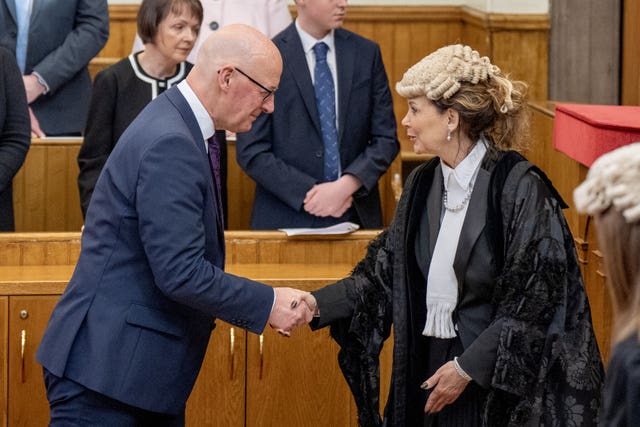
During the probe, it emerged then lord advocate Dorothy Bain had briefed First Minister John Swinney on the charges facing former SNP chief executive Peter Murrell almost a year before they were made public.
Critics say the role in its current form poses a conflict of interest risk between the justice system and the Government.
Confirming the two inquiries, Scottish Affairs Committee chairwoman Patricia Ferguson said: “The role of the Lord Advocate is unique, combining responsibilities as both the Scottish Government’s chief legal adviser and the head of Scotland’s prosecution service.
“The handling of Operation Branchform has once again brought to the fore the challenges this dual role can present.
“It’s right that the appropriateness of the Lord Advocate’s dual role is properly considered, and we’ll explore the advantages and disadvantages of the current arrangement, and possible options for reform.
“Alongside this, we’ll open an inquiry examining the Electoral Commission’s oversight of the funding and governance of political parties in Scotland, and the policies, processes and safeguards associated with the distribution of short money.
“Transparency and accountability are fundamental to our democratic institutions, and we look forward to gathering evidence on whether our current systems are working effectively.
“We will undertake this work alone, following confirmation from relevant Holyrood committees that they do not wish to work jointly with us on these important issues, which interact with devolved competence.”
The Scottish Government, Crown Office, and Electoral Commission have been approached for comment.


Share